
Hotels do not need padel to fill every hour like a city club. They need padel to make the stay feel distinctive — something guests photograph, book as a couple, and mention in reviews. That is an experience design problem as much as a hotel leisure court construction brief. Here is inspiration for weaving courts into a wider leisure destination.
Put the court on the guest journey
The least inspiring hotel courts are the ones you discover only if you ask reception twice. The most inspiring sit on a natural route: lobby → leisure wing → terrace → court, or spa garden → court → pool bar.
Ask:
- Can a guest see the court from a celebrated public space?
- Is the walk pleasant after dark?
- Can non-players watch comfortably with a drink?
- Does the court photograph in brand lighting at dusk?
If the answer is no, the amenity will under-trade even if the glass and turf are excellent.
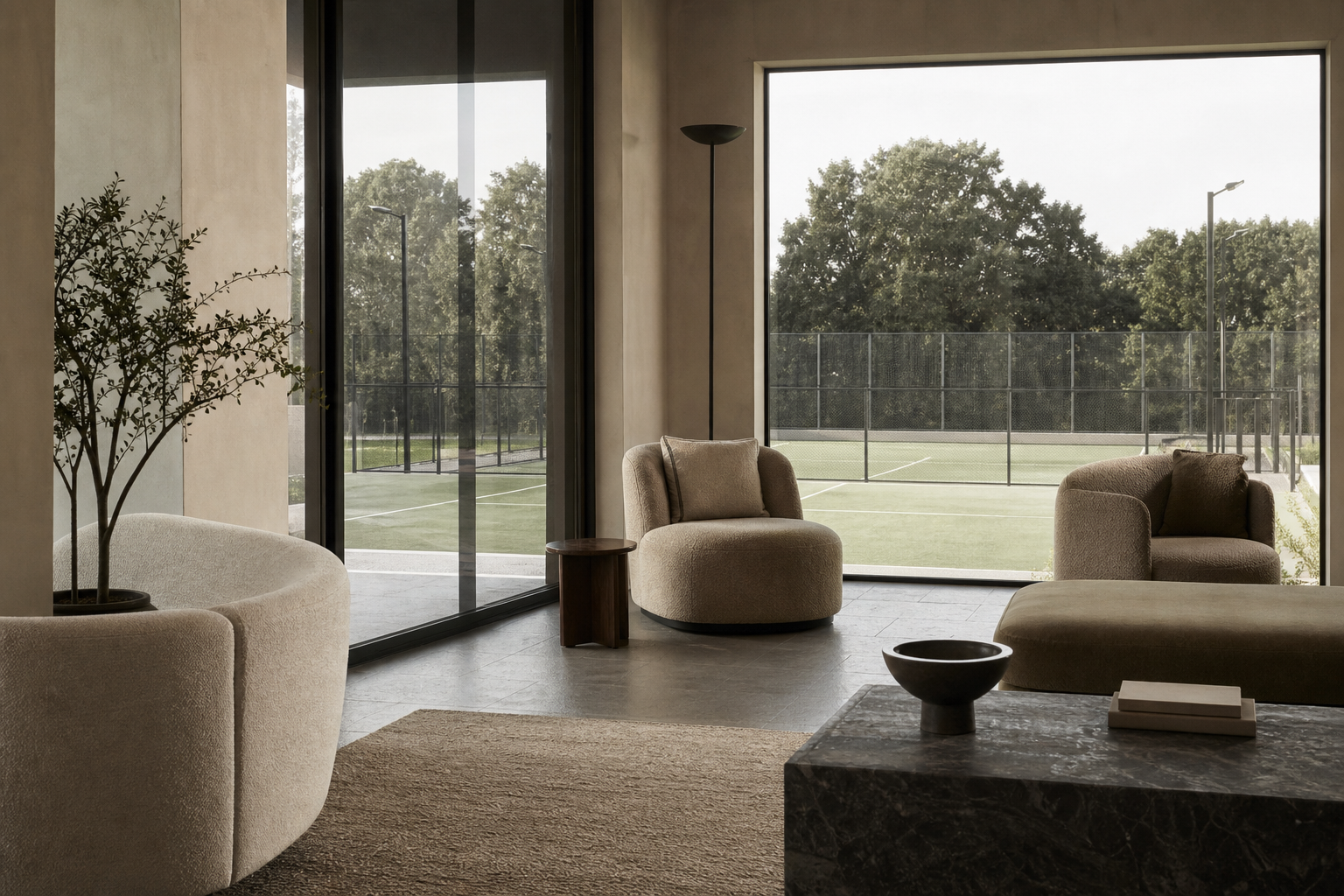
A lounge with a court view lets padel sell the hotel even when guests are not playing.
Pair padel with spa, pool, and soft F&B
Resort and boutique properties already understand amenity adjacency. Padel belongs in that family:
- Spa mornings, padel late afternoon, terrace evening
- Poolside juice or light bar service with court sightlines
- Couples packages that include a court booking and recovery treatment
- Family slots with coaching while adults use the spa
You are not required to build a full club shop and destination bar — but a small racket loan desk, towel service, and a drinkable terrace go a long way.
Design for guests who are not members
Hotel players arrive cold: mixed ability, borrowed kit, limited time. Inspiration that helps:
- Clear wayfinding and simple booking (app or concierge)
- Racket and ball loan that does not feel second-rate
- Generous approach space for photos and waiting
- Lighting that feels hospitable, not industrial — specify lighting with guest amenity in mind
- Rules communicated warmly (glass etiquette, footwear)
Staff training matters as much as steel specification.
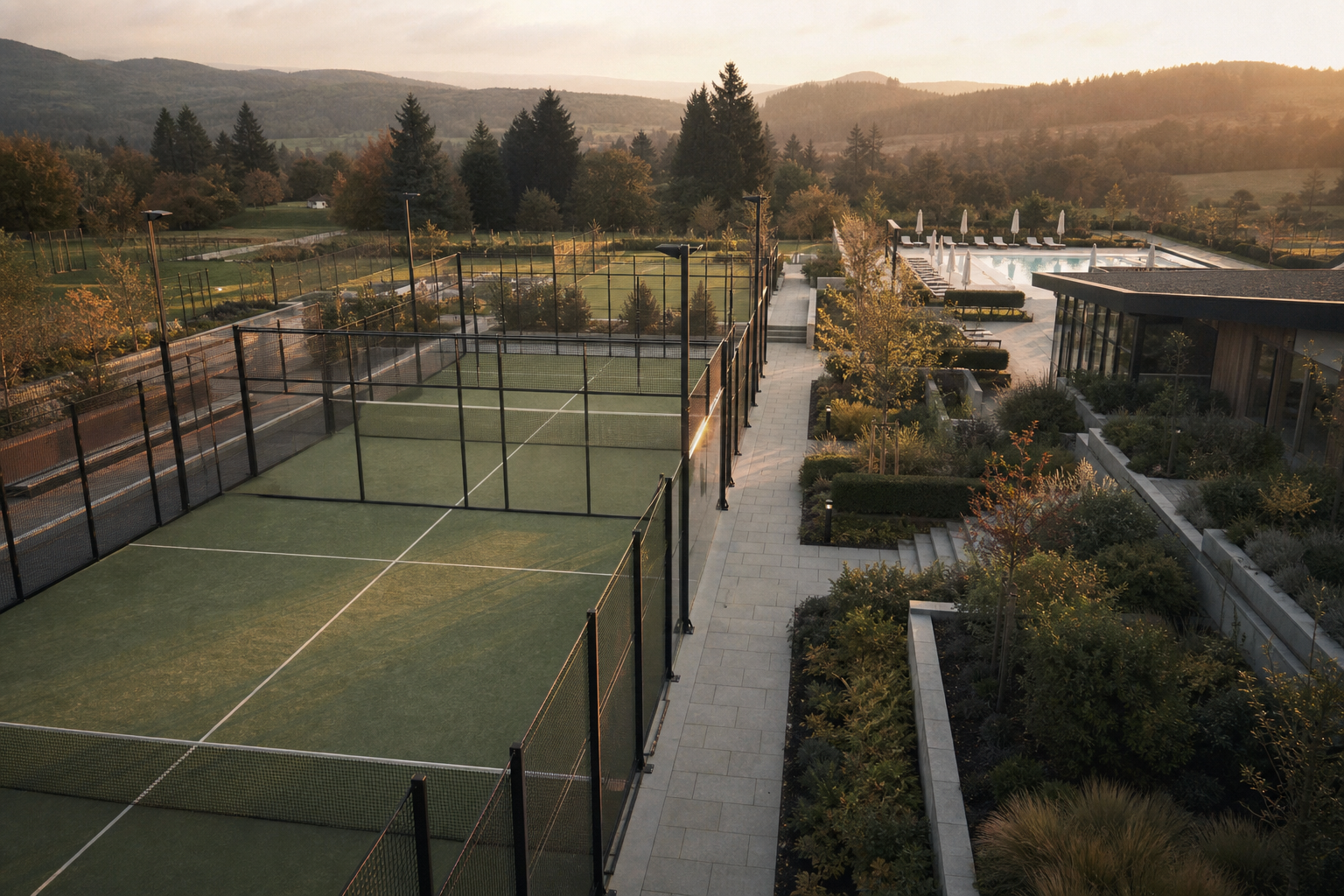
Paths and planting stitch courts into the leisure campus instead of isolating them.
Architecture that matches the hotel brand
A concrete-brutalist city hotel and a countryside Relais-style property should not share the same visual court language. Relate enclosure colour, fencing, and approach materials to the brand palette — quietly.
Indoor or covered courts may suit urban hotels with limited outdoor land; garden courts suit rural and resort sites. Explore indoor vs outdoor when climate and brand experience demand year-round certainty.
Events, corporates, and quiet midweek value
Inspiration beyond stay guests:
- Corporate away-days with court clinics and meeting rooms
- Local membership off-peak to support utilisation (where brand allows)
- Tournament weekends that fill bedrooms
- Influencer and press days that need a photogenic dusk court
Our earlier hotel investment piece covers commercial framing; this article is about making the amenity feel worth the capital.
Operational realities to design for
Hotels run 24/7. Construction and maintenance must respect occupied-site working, guest noise sensitivity, and delivery access. Foundations and enclosure installs need method statements that protect the brand experience next door.
Maintenance should be invisible to guests — early grooming, discreet storage, and scheduled annual servicing rather than emergency call-outs during peak season.
In countryside hotels across Kent and Essex, also plan how wedding and event calendars interact with court noise and lighting. A beautiful amenity that conflicts with the ballroom’s peak hours will frustrate both teams. Shared calendars and clear operating hours belong in the brief, not in a complaint log after opening.
How this differs from a pure padel club
Clubs optimise for repeat local play and membership density. Hotels optimise for delight, review content, and incremental length-of-stay. Court counts are often lower; finish quality and adjacency are often higher. Both still need honest cost and programme planning.
Storytelling details that punch above their cost
Inspiration is often inexpensive relative to the enclosure:
- A single hero dusk photograph on the booking engine
- A concierge script that offers “court at golden hour”
- Loan rackets that look cared for
- A small spectator ledge with planters, not temporary barriers
- Consistency between spa towel colour and court-side furniture
These details do not replace drainage or a true slab — they amplify a court that was specified properly. Guests remember how the amenity felt in the itinerary of their stay.
Next step
If you are placing padel inside a hotel or leisure masterplan, bring site plans and brand references. Request a project consultation — we help operators across Surrey, Berkshire, and the wider UK compose courts into the guest journey, not leave them behind the bins. Related reading: gym and wellness venue ideas and the project gallery.

