
A garden padel court succeeds when it feels inevitable — as if the landscape always had a place for glass, steel, and turf. That is a design problem as much as a construction one. This article gathers residential inspiration for homeowners who want a court that belongs to the property, not one that dominates it.
Start with atmosphere, not catalogue finishes
Before you choose turf shade or frame colour, decide how the court should feel at 8am on a Saturday and at 8pm on a Wednesday. Some gardens want a quiet, almost gallery-like sports room outdoors. Others want social energy — a place friends gather after work.
Atmosphere drives every later choice: screening height, lighting temperature, proximity to the house, and whether the court reads as a private sanctuary or a lifestyle centrepiece. Our project planning checklist helps turn that mood into a brief a builder can price.
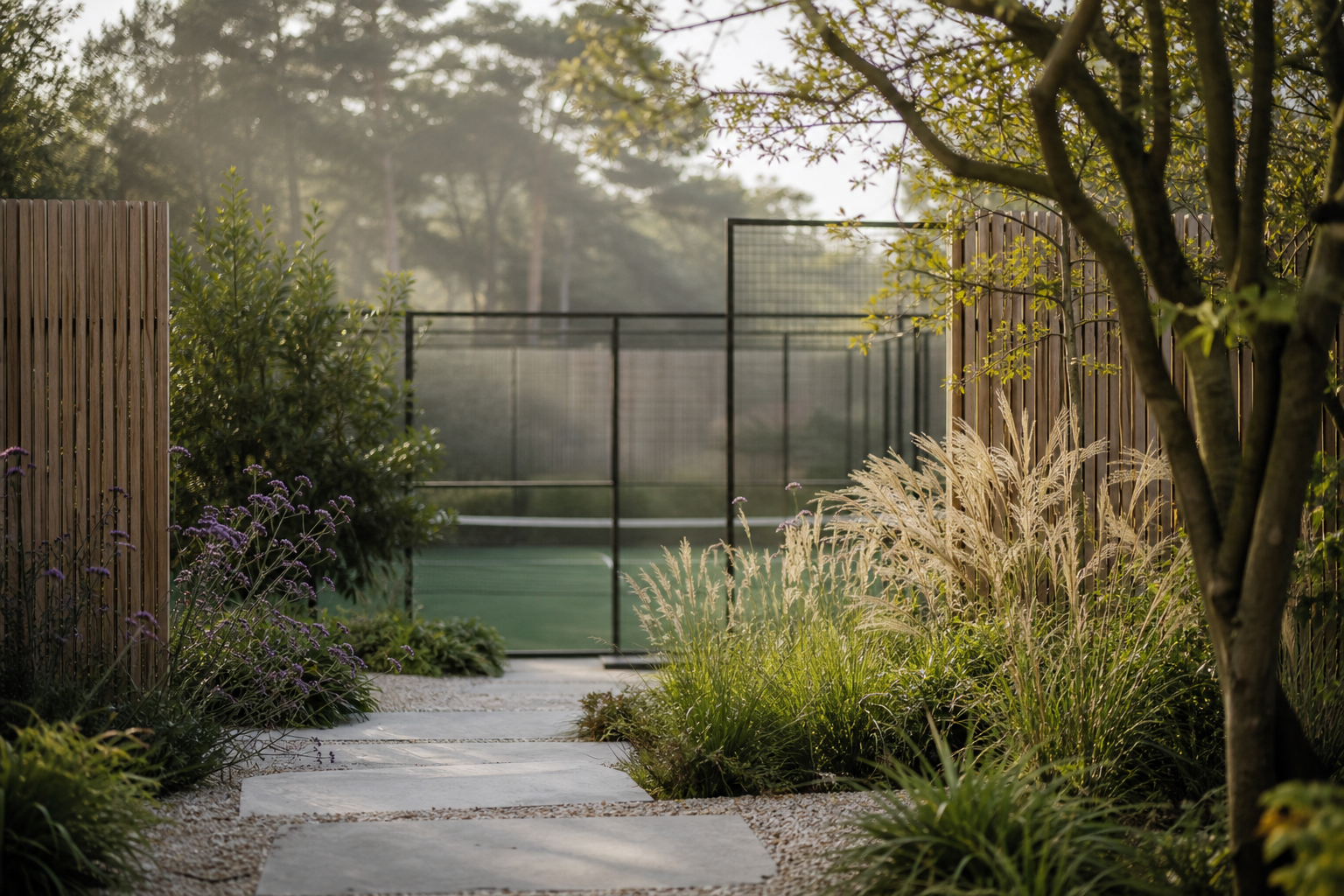
Approach routes matter — the walk to the court sets the tone before the first serve.
Orient for light, neighbours, and views
UK gardens rarely offer a perfect rectangle in the middle of nowhere. Orientation is a negotiation between solar glare, overlooking windows, prevailing wind, and the view you want from the kitchen or terrace.
Inspiration cues that work well on residential plots:
- Side-garden courts tucked behind hedges, leaving the main lawn for family use
- End-of-garden courts with a composed axis from the house — path, planting, court
- Courtyard courts on larger plots where walls and planting create an outdoor room
In Surrey and Hertfordshire suburbs, discretion often beats drama. A court that neighbours barely notice is easier through planning and kinder in daily life.
Landscape is part of the court specification
The most inspiring home courts treat planting and hardscape as primary materials. Timber screens, evergreen hedges, ornamental grasses, and gravel or stone paths soften the industrial language of steel and glass.
Think in layers:
- Foreground — terrace, seating, or quiet arrival space
- Middle — screening that frames rather than hides the court entirely
- Court plane — enclosure, turf, and lighting specified as a system
- Background — trees and sky borrowed as visual depth
Avoid planting that will drop heavy debris onto turf or push roots under foundations. Beauty that creates maintenance misery is not good design.
Lighting that flatters the garden after dark
Evening play is often the reason a home court earns its keep. Inspiration does not mean floodlighting the entire back garden. It means designed padel court lighting that makes the playing volume clear while keeping spill controlled for neighbours and for the atmosphere you want from the house.
Warm ambient path lights, darker surrounds, and a well-aimed court scheme create a jewel-box effect at dusk — the court glows; the rest of the garden stays calm.
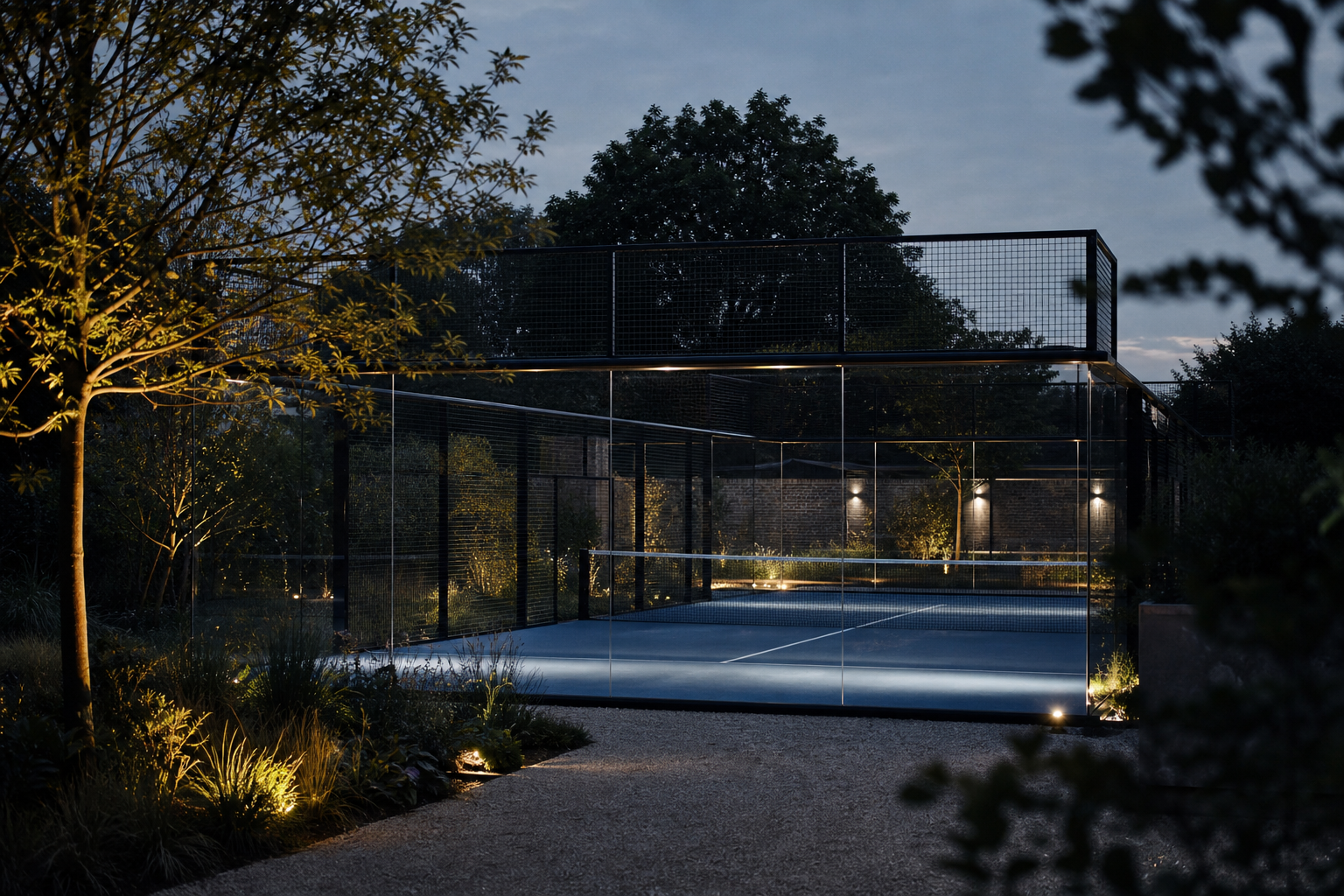
Controlled lighting turns a garden court into an evening room outdoors.
Materials that age with the house
Luxury home courts and private estate courts look best when enclosure finishes relate to the architecture nearby — charcoal steel near contemporary extensions, warmer tones near brick and timber, glass detailing that feels intentional rather than temporary.
Match the court to the home’s quality bar. A meticulously restored period house with a bargain enclosure will always look unresolved. Compare systems in our guide to choosing a padel court manufacturer.
Small luxuries that change daily use
Inspiration is often in the edges:
- A covered nook for rackets, towels, and a water point
- A simple bench with a view of the court
- Storage that keeps the garden tidy between matches
- A short run of heated paving on the approach for frosty mornings
- Acoustic planting where ball noise meets a neighbour boundary
None of these replace good drainage and a true slab — they amplify a court that was built properly underneath.
What to avoid if you want lasting inspiration
- Placing the court where it blocks the best garden view from the house
- Skipping screening “to save money”, then living with a visual sports cage
- Over-lighting for club Lux levels on a quiet residential plot
- Choosing finishes before you understand access and crane logistics
For the construction sequence behind the pretty pictures, see how to build a padel court and common mistakes.
A simple inspiration brief you can reuse
If you are collecting images and notes before a consultation, capture four lines:
- Mood — sanctuary, social hub, or family sports room
- Primary view — where the court should be seen from indoors
- Evening ambition — casual hit, serious play, or both
- Non-negotiables — privacy, tree retention, budget band, opening season
That short brief prevents catalogue browsing from outrunning the plot’s realities. It also helps us recommend whether a mid-range enclosure on excellent civils will serve you better than a premium frame on a compromised base.
Bring the vision to a real plot
Every garden has different levels, trees, and neighbour relationships. Request a project consultation and we will help you translate inspiration into a buildable layout for sites across Berkshire, Kent, and the wider UK — then point you to gallery examples that match the mood you want.

