
Padel looks simple from the outside: a framed box, glass ends, turf, play. The projects that go wrong usually share the same pattern — decisions made in the wrong order, or skipped entirely. Whether you are planning a garden court or a commercial facility, these are the mistakes we see most often, and the practical fix for each.
1. Buying a court before you understand the site
Catalogue browsing feels like progress. It is not a site assessment. Soft ground, steep falls, root systems, and impossible crane access can double civil costs overnight.
Avoid it: Measure the footprint, check levels, and confirm delivery routes before you shortlist brands. Start with planning your padel court.
2. Treating foundations as optional
The cheapest line on a quote is often the most expensive mistake. An enclosure on a poorly prepared slab will show wave in the turf, stress in the glass, and water where you do not want it.
Avoid it: Budget foundations as core scope. Insist on levels, reinforcement, and curing time that match the manufacturer’s requirements.
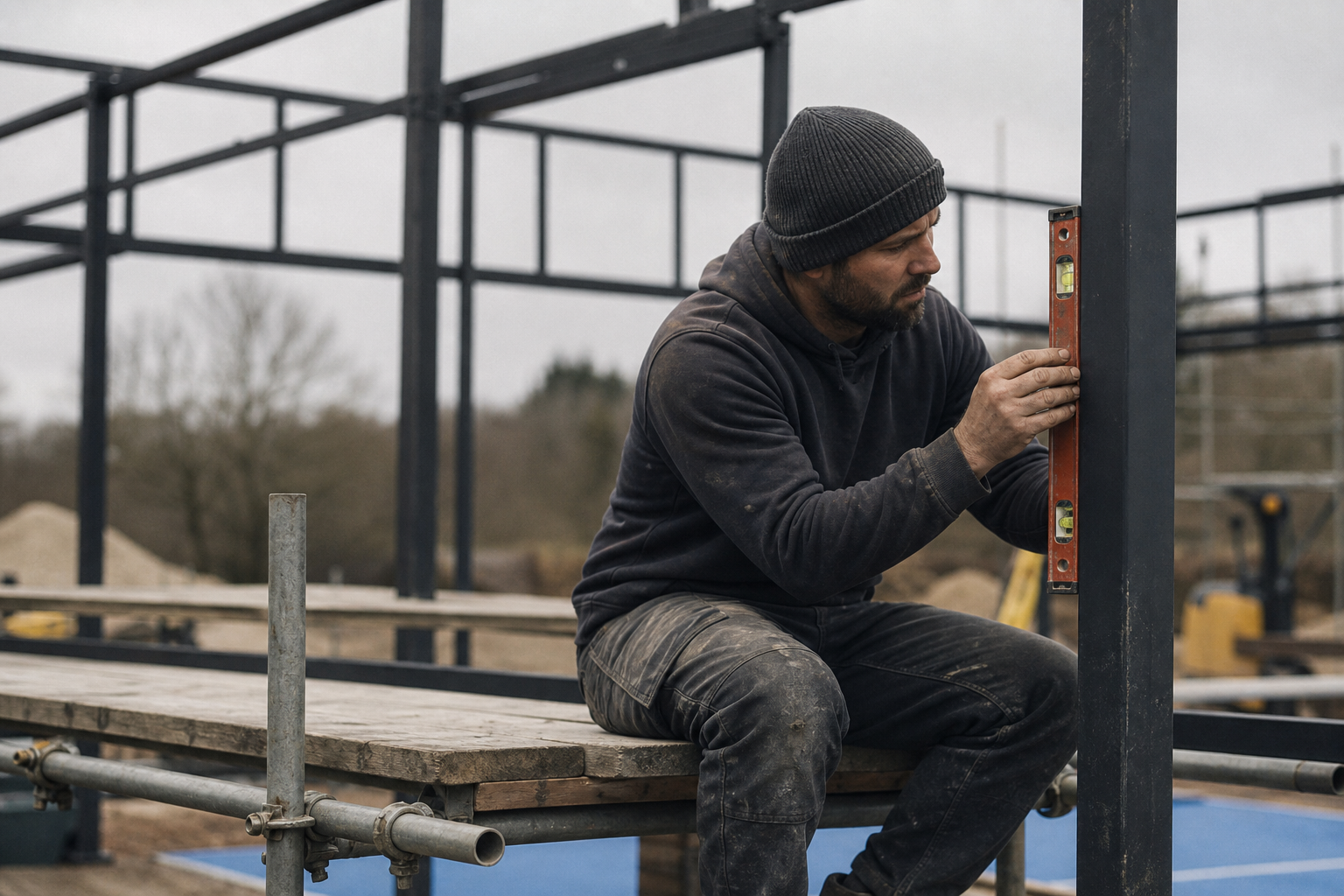
Alignment problems are cheaper to catch with a level than after glass is hung.
3. Under-specifying drainage
The UK climate is not optional. Standing water against steel and under turf accelerates wear and cancels evening bookings after rain.
Avoid it: Design drainage with outfalls, falls, and maintenance access. Do not rely on “it will soak away”.
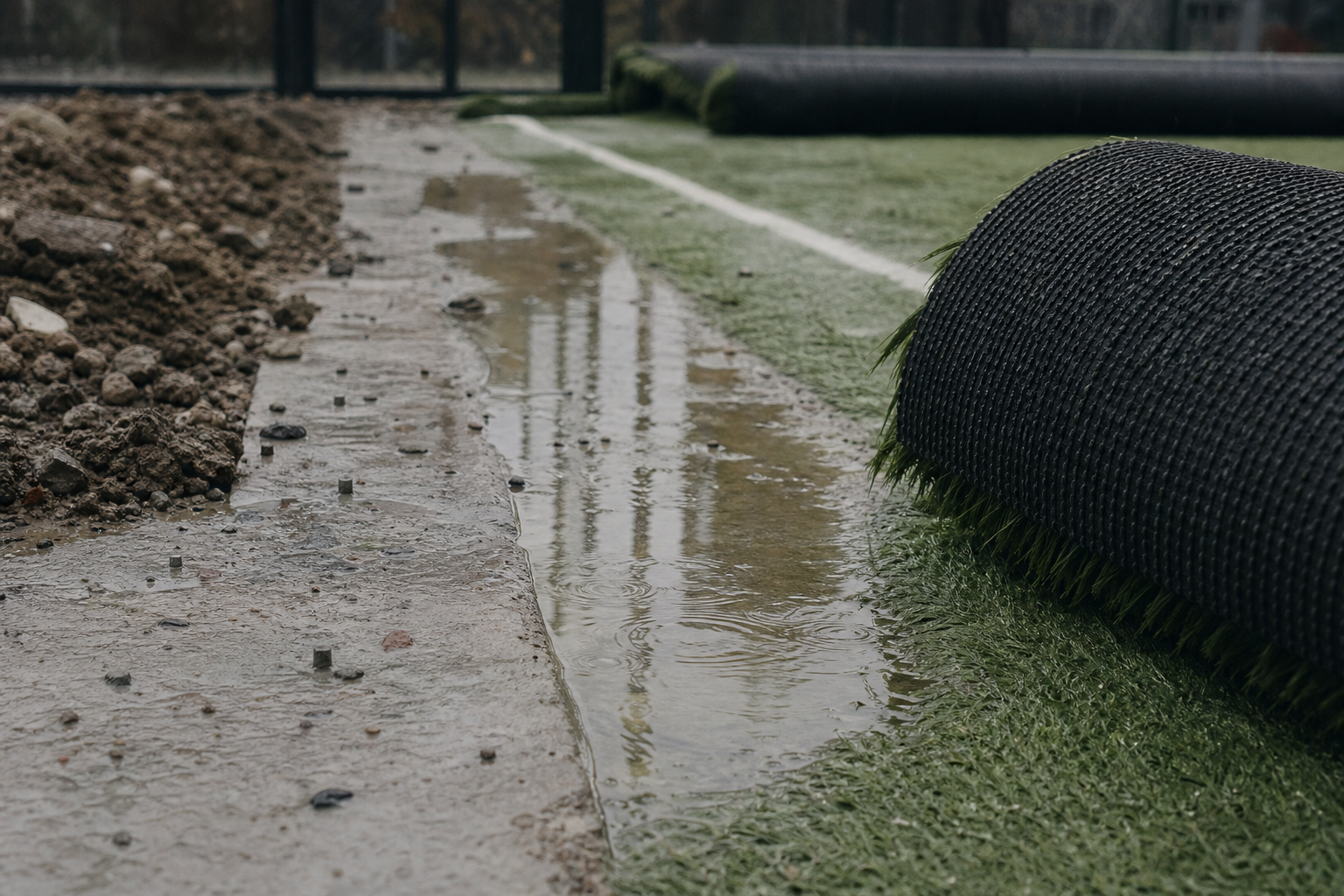
Drainage failures announce themselves the first wet week after opening.
4. Leaving planning until materials are ordered
Planning determination is slow. Lead times for glass and steel are real. Combining both without float is how opening dates slip by a season.
Avoid it: Establish the planning pathway early — especially for lighting, conservation areas, and commercial use. See planning permission for padel courts.
5. Mixing enclosure components from unrelated systems
A frame from one supplier, glass from another, and turf from a third can void warranties and create fit problems at junctions.
Avoid it: Specify an integrated manufacturer system — and install it to that system’s method. Compare options in choosing a padel court manufacturer.
6. Ignoring access and crane logistics
Suburban gardens in Surrey and Hertfordshire regularly need creative lifting strategies. Discovering that on installation week is painful.
Avoid it: Walk the access path with the installer. Measure gate widths, overhead cables, and crane pads before contracts are signed.
7. Designing lighting as an afterthought
Lighting drives neighbour complaints, cable routes, consumer unit upgrades, and booking revenue. Retrofitting is rarely elegant.
Avoid it: Decide evening-play requirements at brief stage. Use a proper lighting design rather than a pair of bright floodlights aimed at the next garden.
8. Optimising for headline price instead of total cost
A £25k “court” that excludes civils, planning support, and compliant installation is not cheaper — it is incomplete.
Avoid it: Compare like-for-like packages. Read how much a padel court costs with a sceptical eye for exclusions.
9. Forgetting who will maintain the court
Clubs open with beautiful turf and no grooming plan. Hotels hand keys to a busy facilities team with no glass or sand guidance.
Avoid it: Agree a maintenance and annual servicing regime before opening day. Budget consumables and inspections as operating cost.
10. Overbuilding the wrong things
Feature lighting, complex landscaping, and premium colourways are easy to fall in love with. They do not compensate for thin steel protection or weak sub-base.
Avoid it: Spend first on structure, drainage, and manufacturer-compliant glass walls and turf. Beautify what remains.
11. Running a commercial programme with a residential mindset
A private court can tolerate a quiet midweek install. A school, hotel, or live club cannot. Safeguarding, noise, parking, and phased access need planning.
Avoid it: Write an occupied-site method statement. Sequence deliveries. Communicate with stakeholders early.
12. Skipping commissioning and documentation
If nobody checks levels, Lux readings, gate hardware, and warranty registration, small defects become arguments six months later.
Avoid it: Require a handover checklist, as-built notes, and care guidance. Keep supplier warranties in one place.
How mistakes compound
These errors rarely arrive alone. Late planning pushes rushed groundworks. Rushed groundworks create glass alignment issues. Alignment issues get “solved” with packing and site fixes that void warranties. The remediation bill exceeds the saving from the original cheap quote.
A cleaner sequence — brief, site, planning, specification, build — is slower in week one and faster by month three. Our ultimate how-to guide and construction timeline show what that sequence looks like in practice.
Quick self-check before you sign anything
- Do we have measured levels and access notes?
- Is drainage designed, not assumed?
- Is planning status known?
- Is the enclosure a coherent manufacturer system?
- Does the quote include civils, lighting, and commissioning?
- Who maintains the court in year one?
If any answer is fuzzy, pause. Ambiguity is cheaper to resolve in a meeting than on a slab.
Get an independent read on your plan
Padel Construction UK helps clients pressure-test briefs and specifications before capital is committed. Request a project consultation for projects across Kent, Essex, Berkshire, and nationwide — home courts and commercial schemes alike.

